
The Speech

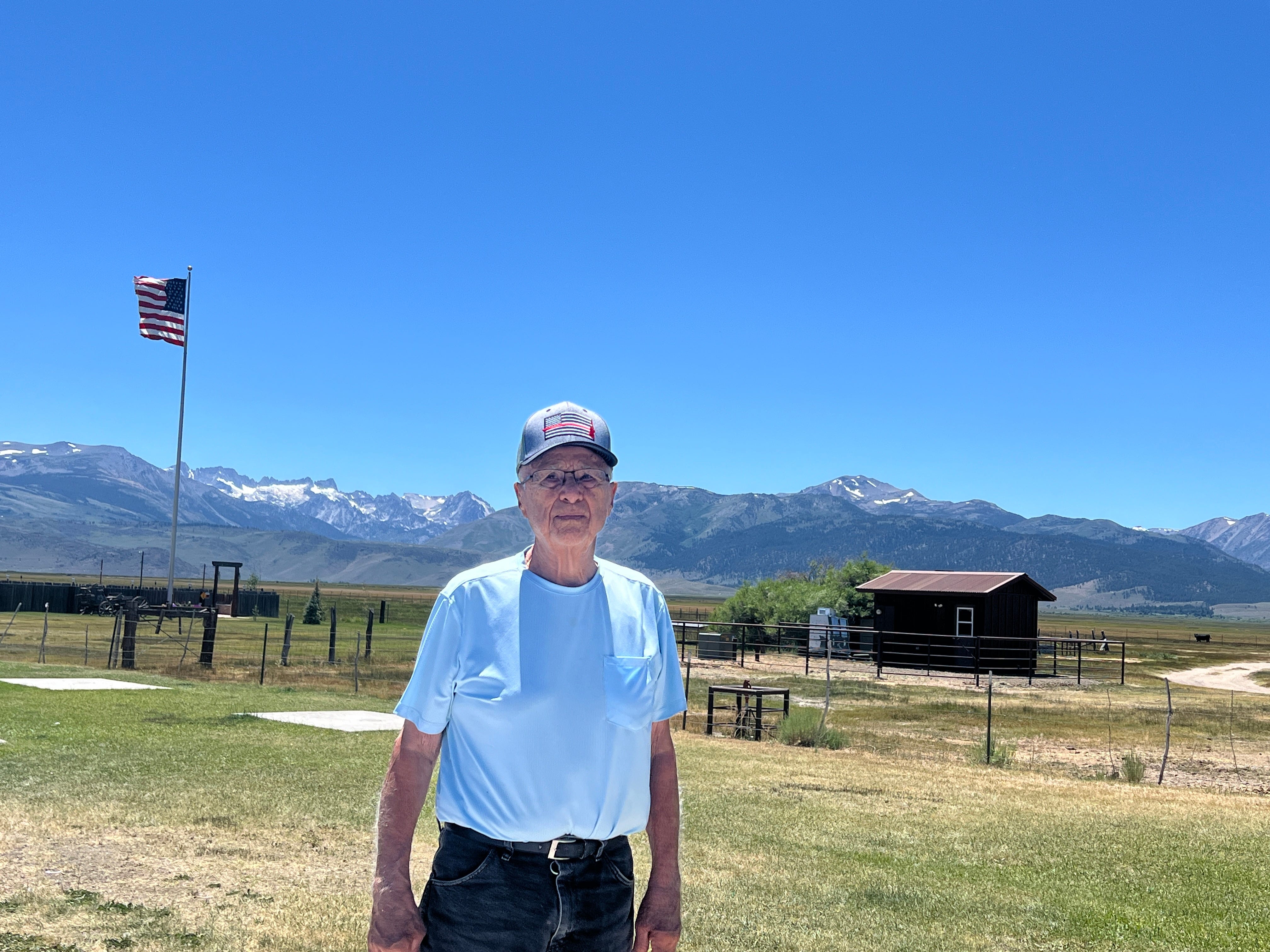
“When we are born into eternity from the womb of time, there will be accountability for our actions.”
This is one of the spooky things my 91 year old grandpa says to me every time I see him.
He is, somehow, still physically strong. Still pottering around his rural house, built decades ago with his sons who now never visit. He’s always just shy of completing the many tasks he feels need doing before he can sell and downsize.
Over the last 10 years, despite his physical ability, he’s started to forget things.
These days whenever we talk, he gives me the exact same speech. I’ve heard it hundreds of times in the last decade. Always near word-for-word identical.
The speech is delivered with quiet intensity and urgency. My eternal soul is on the line, and if he can deliver the speech in just the right way, maybe I will finally listen. Maybe he can save me.
The speech starts tentatively, shyly, expectant of rejection:
“There are things I want to tell you… when I talk about these things no one understands.”
The vulnerability in his voice is overwhelming, he’ll be wringing his hands, leaning in. Redirecting the conversation from this point is futile. Every interjection will be met with a poised waiting to re-enter.
Before the speech became the gravitational centerpoint around which all our interactions orbited, we didn’t just talk about religion.
I think my grandpa sees me as a surrogate son. His father was basically absent in his life. My mom was a single mom until I was 10. He was always around, a mainstay of my childhood and teenage years.
His register shifts briefly to defeated frustration:
“People think I’m talking about religion, but it’s NOT about religion. It’s about the truth.”
As an arrogant teen, I’d argue with my Grandpa hard about the so-called truth.
I’d smugly ask him about the paradoxes of how evil could exist with an omnipotent creator. I’d offer materialist counters to the canonical miracles. Raise historical and doctrinal inconsistencies.
One time I read the bible, cover to cover, so I could argue with him more effectively.
“Our Lord gives us eternal life. I mean, you have to stop and think about that — to live forever and never die in his kingdom.”
I credit my grandfather with a good chunk of my intellectual curiosity. I was a know-it-all kid, surrounded by adults who were often too busy or distracted with making ends-meet to talk deeply with me about ideas.
Except for my grandpa. No matter how much I questioned his fundamental views about reality, he kept talking to me. He kept engaging.
The speech goes on:
“What I’m trying to say is there’s a purpose why we’re here. And it’s not being rich and famous like Elon Musk.”
“Our Lord says something, the evil one contradicts it. So you’ve got this going back and forth. And the battlefield is your mind.”
Strangely, the older I get, the more I find myself agreeing with the speech.
Seek to be good in actions, but also intent. Be skeptical of society’s stories about what matters. Life has deeper purposes. Material success only goes so far towards salvation. Cultivate compassion for people suffering.
I think this is good advice. It’s advice I would give to my grandson if I had one.
After a while, the speech turns somber:
“But my biggest concern is for all the grandkids, you know. I pray for you all every day.”
No one else in my family wants to hear the speech anymore. I get it. It’s tiresome. How many times can you earnestly try to give someone in this loop reassurance, just to be told you don’t really get it?
But I see my Grandpa now, desperate to be listened to, to say the thing in just the right way to be heard. And I see myself as a kid, wanting to be talked to.
The generational transposition is like vertigo.
I try to keep listening in each delivery of the speech. I try to emphasize that I really really am paying attention. I try to reassure him that it’s not lost on me.
The speech winds down with:
“But anyway, maybe one of these days if I’m still around, I’ll tell you some of the stuff that — if you’re ready for it, you know what I mean. And take it seriously, you know.”
No matter how many times I hear the speech. No matter how earnestly I engage. He can’t remember. He always walks away feeling like I never really hear it.
It breaks my heart.
This man inspired me more than anyone else to think about reality, to consider what is really important in life and to be critical about the stories we are told, and that our morals and actions matter.
He did this when everyone else was too busy. He kept talking to me, year after year, even when I foolishly tried to hurt him and tear apart his views.
The last line is always:
“Please, remember to say your prayers”
I will. I do. Thank you.
I have an elder like this, too. One who I ignored, sort of chuckled at. Her earnestness! The way her lips popped when she read her Bible. (Silly, magical thinking.) Her silky, liver-spotted hands! I didn't see how much work they were putting into me. I had some troubled times, and she'd always tell me she was praying. I talked about her faith recently, to a friend, and that friend said: "Wow, her prayers really worked." And even with all my new, mature and spiritually-inclined perspective, I'd failed to appreciate that. Her prayers really worked.
beautiful.